
Why we need both proof and counterexamples in science
Proof and counterexamples are the yin and yang of the natural sciences; maintaining a balance of observation that builds rigour in theories over time.
Proof and counterexamples are the yin and yang of the natural sciences; maintaining a balance of observation that builds rigour in theories over time.
Is there such thing as “proof”?
There is a division between science and mathematics when if comes to the word “proof”. In maths, proof refers to absolute facts that are true in all cases and can be worked out with logic. While in the natural sciences “proof” is a lot more nuanced; theories are built on the available evidence, and experiments can then be designed to either prove or disprove those theories. Proof is rarely absolute in the natural sciences, and a scientific theory is almost never a “proven fact” in the mathematical sense, but more the best explanation we have given all the evidence available to us.
We are taught that it is easy enough to design an experiment to try to prove a theory, however there is often more value in trying to disprove or break a theory. This is true scientific rigour; if a theory stands up to multiple attempts at trying to disprove it, then it will stand the test of time, while if a theory is broken when evidence is presented that disproves it, then we can refine that theory and make it more robust. An example of a theory that has stood the test of time is that of gravity, which has withstood multiple attempts to break it, rather than never being questioned after being “proven” once.
Why counterexamples are so powerful
While proof can be seen as the building blocks from which theories can be built, counterexamples can be seen as a wrecking ball, demolishing parts of the theory that don’t stand up to testing.
However, this deconstruction of scientific theory is actually quite constructive! It allows us to refine, improve or even completely rethink the flawed theories we have to explain the world around us, building understanding, even if it means going back to the drawing board.
A nice demonstration of the power of counterexamples could be as follows:
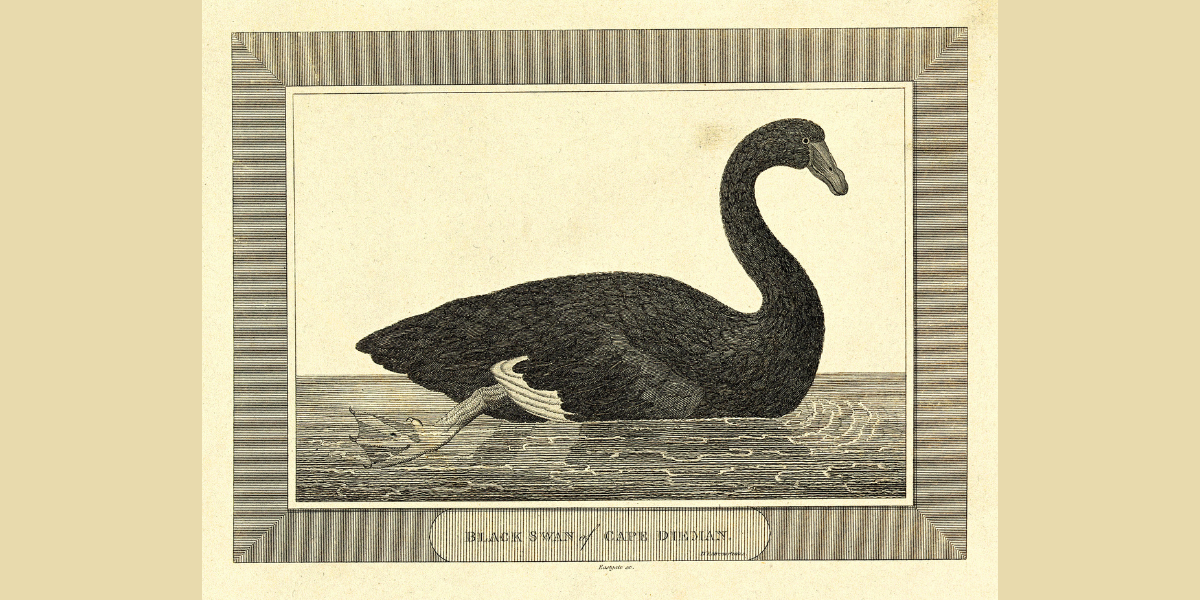
You could conduct a thousands experiments that show that all swans are white, adding a lot of evidence to the theory that all swans are white. However, it only takes one experiment that finds a black swan (a counterexample), for the theory to be broken. This shows it only takes one counterexample for a theory to come apart and need refining.
Both are important
While proof is rarely absolute, it provides the scaffolding from which we can build understanding and construct theories.
Counterexamples drive growth, forcing us to refine or discard models that are inaccurate or don’t work anymore in favour of ones that take all the current understanding into account.
The loop of evidence
Science is always moving through a constant cycle of creating a theory (proof), testing said theory, and breaking it (counterexample):
- A theory is proposed based on current data
- Experiments are conducted to test this theory
- A counterexample is found that disproves the theory
- The theory is refined to accommodate new evidence, or a brand new theory is proposed
And so the cycle continues…
Disproving established theories is controversial
The scientific publishing industry tends not to favour studies that go against an established theory as the implications for the wider network or highly cited science and project funding can be very disruptive. However it is important that this disruption happens for the greater good of science.
It is also easy to become attached to particular scientific theories and it is difficult to see them challenged by counterexamples. But it is important for scientists to remain objective in the pursuit of rigour.
Our users on Paperstars are allowing a spotlight to be shone on studies that may not necessarily have a high citation count, but highlight gaps or discrepancies in current understanding. These conversations are important as they drive growth and spread awareness of counterexamples that could change landscape of a particular scientific field
What are your favourite examples of theories that have been blown wide open by a counterexample? Or what is your favourite theory that has stood up to testing over the years?
Share your thoughts and start the conversation!